★★★★★
Amazing movie
Z_—February 26, 2026✓ Verified purchase
Amazing movie, cult classic Read more


Matthew Modine (Actor), Adam Baldwin (Actor) Rated: R Format: Blu-ray
In Stock
Easy Returns · Return eligibility shown before checkout
| Genre | Action & Adventure, Drama, Military & War |
|---|---|
| Format | NTSC |
| Contributor | Adam Baldwin, Arliss Howard, Dorian Harewood, Ed O'Ross, Gustav Hasford, Jan Harlan, John Terry, Jon Stafford, Kevyn Major Howard, Kieron Jecchinis, Kirk Taylor, Lee Ermey, Matthew Modine, Michael Herr, Stanley Kubrick, Tim Colceri, Vincent D'Onofrio See more |
| Initial release date | 2020-09-22 |
| Language | English |
| digital_copy_expiration_date | September 30, 2022 |
|---|---|
| mpaa_rating | R (Restricted) |
| product_dimensions | 0.7 x 7.5 x 5.4 inches; 0.02 ounces |
| item_model_number | 883929704712 |
| director | Stanley Kubrick |
| media_format | NTSC |
| run_time | 1 hour and 56 minutes |
| release_date | September 22, 2020 |
| actors | Adam Baldwin, Dorian Harewood, Lee Ermey, Matthew Modine, Vincent D'Onofrio |
| dubbed | : Spanish |
| subtitles | : Spanish |
| producers | Jan Harlan, Stanley Kubrick |
| studio | WarnerBrothers |
| writers | Gustav Hasford, Michael Herr, Stanley Kubrick |
| number_of_discs | 2 |
| best_sellers_rank | #2,264 in Movies & TV ( See Top 100 in Movies & TV ) #28 in Military & War (Movies & TV) #301 in Drama Blu-ray Discs #391 in Action & Adventure Blu-ray Discs |


Product video 1
Customers say
Customers consider "Full Metal Jacket" one of the best war movies ever made, praising its realistic portrayal of Marine Corps boot camp and Vietnam War scenes.
Amazing movie, cult classic Read more
Enjoyed Read more
When this film was first released, I wasn’t interested in seeing it (though I did see Platoon). At that age in my life, 19-20, I wasn’t yet a SK fan like I am now. When I eventually saw it, I thought it was interesting, but it took me several viewings and a few courses at the Art Institute of Pittsburgh (RIP) to fully appreciate Kubrick’s messages and symbolism. This film probably has the most subtle and not so subtle messages and symbolism out of all of his movies. Every time I think of a certain scene , or watch the film again, and consider the details therein, I realize there’s another thing I missed. There is so much here to analyze. The Kubrick Site is the best resource or collection of resources and articles that I know of, that cover his movies. There is at least 1 article there about FMJ. But an entire book (300 pages, say) would be the bare minimum amount of space necessary to cover everything just in this movie. As far as its realism, I have spoken with at least 1 Vietnam veteran who said that this is the best movie about that war. The most realistic. There are several pop culture events or news items that are mentioned. Such as CBS News reporter Walter Cronkite stating that the war is not winnable. He really did say that, so I’m not spoiling anything for you. The one issue about this film, that SK definitely intended, is the racist jokes. And there are a lot. A LOT. Young people of today, who are more sensitive to such “humor”, are more likely to be offended. Although, in my case, even when I told them 40 years ago, I knew they were distasteful (I stopped telling them before I graduated from high school. No one is perfect). There are also a few lines of dialogue that reference other movies (Apocalypse Now, for one) which may or may not be intentional on SK’s part. The film is quite brutal, in several respects (violence, racist jokes, racism specifically concerning Asian people, sexist jokes and observations). This movie is definitely not for those with weak stomachs or who are easily offended. But none of SK’s films starting with Lolita are (other than 2001, and Dr. Strangelove, more or less). Highly recommended, if any of the 3 things I mentioned in the subject line are of interest to you. Read more
Great, thanks! Read more
When I teach my film classes, I find that Kubrick (along with Hitchcock) is one of the most misunderstood filmmakers of the last century. Why is an essential component of this filmmaker (as well as others) lost in the translation? Part of it seems to be the separation between film history/criticism in the United States, where film enthusiasts seem content with the film alone, and forget that, prior to the internet, movies existed within a network of criticism that extended from the Westcoast Studios to the Eastcoast critics, and stretched overseas, where brilliant essayists like Truffaut were able to pick apart the latest offerings in the pages of the Cahiers du Cinema. These filmmakers used the theater as an extension of a critical dialogue that helped explain their core philosophies; the New york Critics and European Essayists were really cinematic linguists who helped to make sense of the "linguistic" complexity of a medium whose essential grammar seems to be more or less intuitive, both concrete and abstract. The transition to more escapist fare (at least in the late 70s studio Hollywood system) has meant a transition in the critical world as well; with the popularity of the Cinematic Essayist waning in the last 20 years, being instead replaced by schtick and the "every man" approach to film reviews, and a cruel thumbs-up, thumbs-down approach -- more or less a symptom of our collective attention deficit. While these approaches are necessary, the lack of educated "cinematic linguists" is resulting in the loss of understanding when it comes to our most important filmmakers, of which Kubrick is undoubtedly one. For instance, it surprises most people to know that one of our most important stylists considered himself to be an "objective director." Kubrick's minimalist, nuanced, distanced style is really the product of his core philosophy which was to "observe" rather than to "impart." Kubrick aligned himself with documentarians who used aesthetic restraint in crafting ethnographic narratives. In fact, if you really study the man -- his writings, his interviews -- you will find that his entire career was really a quest for cinematic truth. He constantly struggled against his own interpretation and impressions of events, to try to give a multi-faceted view of reality and drama, of which he believed that narrative itself was really an unnatural hallucination imposed on a series of random events by the mind's need to rationalize and organize. Kubrick struggled against not only studio narrative -- the classic three-act structure -- which he found predictable and as pedestrian as an overly familiar nursery rhyme; but he also resisted the narrative of the mind, its need to simplify, reduce, and impose. Even more than that, Kubrick struggled against the medium itself. In an interview, Kubrick opined about the need to import rocks onto the set of Full Metal Jacket, to acquire the realism he knew would be beyond his reach with simulation. Sounding a lot like Jorge Luis Borges speaking about the problems of a truly realistic map, he explained the natural processes that would go into the formation of those rocks, with which Hollywood verisimilitude just could not compete. Importing those rocks is proof of Kubrick's devotion to objectivity, which he felt was constantly compromised and corrupted by the cinematic medium itself (never mind that those rocks existed on a fabricated sound stage in London -- but Kubrick's philosophy on realism/formalism was always filled with contradictions). It's interesting to note that critical interpretation of Stanley Kubrick largely fails because it excludes the man's own take on his own material. Never being one to shut down another's opinion, Kubrick nevertheless had very strong and opinionated feelings about his own films, opinions that seem incredibly out-of-step with popular interpretation of his work. I would like to remind the reader (whoever has been kind enough to stay with me thus far), an obvious fact, that will seem more obvious in retrospect -- Kubrick had a lifelong fascination with the propagandistic nature of cinema as well as the theme of social brainwashing. A better word for brainwashing is "conditioning" as it's broader and encompasses what Kubrick felt was the most consistent theme running throughout the entirety of his work. Kubrick was obsessed with how man's psyche could be conditioned -- through media, through government, through aristocracy, through peer pressure, etc. And in the end, he was fascinated by the struggle between an individual's innate nature and the outside, coercive forces that threatened to eliminate his nature or suppress it once and for all. "Full Metal Jacket" has the observationalist impulse of a documentary, the lyric quality of silent cinema, the rigorous technical prowess of Max Ophuls, and the elliptical, bifurcated narrative of an art house movie. In light of these influences, "Full Metal Jacket" is less an unconventional, frustrating war movie, than a logical realization of Kubrick's core aesthetic principles as applied to the Viet Nam conflict. That being the case, what unites the two "halves" of Full Metal Jacket is the theme of "social conditioning." A soldier is like a full metal jacket -- his outer shell is formed by a rigid, brutalizing, indifferent, nearly industrial process, and yet, somewhere beneath is the soft material that can prove pliant and powerful in the wrong hands. Viewed from this perspective, the second half of "Full Metal Jacket" is not as off-putting as some have unfairly suggested. For those who are intimately familiar with the man's philosophies, the "second half" is a natural consequence of the first half, and succeeds brilliantly in emphasizing Kubrick's fascination with man's duality -- a duality that becomes more apparent in a sustained and prolonged conflict between two national dualities. (If you really want insight into the work of Kubrick or other filmmakers, do not divorce them from their influences, or their own philosophies which exist in interviews, private notes, and other secondary and third sources). Read more
This movie is intense but so well made. It gets quite dark, but that is the reality of war. The way it was shot was so engaging & interesting to watch! Read more
Nodding-to and repeating similar themes to A Clockwork Orange and The Shining. You can also see the emergence of his sort of meta commentary on the film industry, which he ultimately epitomizes in his later film, Eyes Wide Shut (Kubrick's magnum opus imo). Kubrick doesn't preach, but reveals a sort of moral theme in Full Metal Jacket which isn't political or even anti war per se. It's much more universal than that. He uses cartoonish themes contrasted with raw violence, classic kubrick asburdity to create the drama which resolves unavoidably revealing truth about life, creation and their obvious counterparts. Read more

Grave of the Fireflies - Limited Edition Steelbook Blu-ray DVD
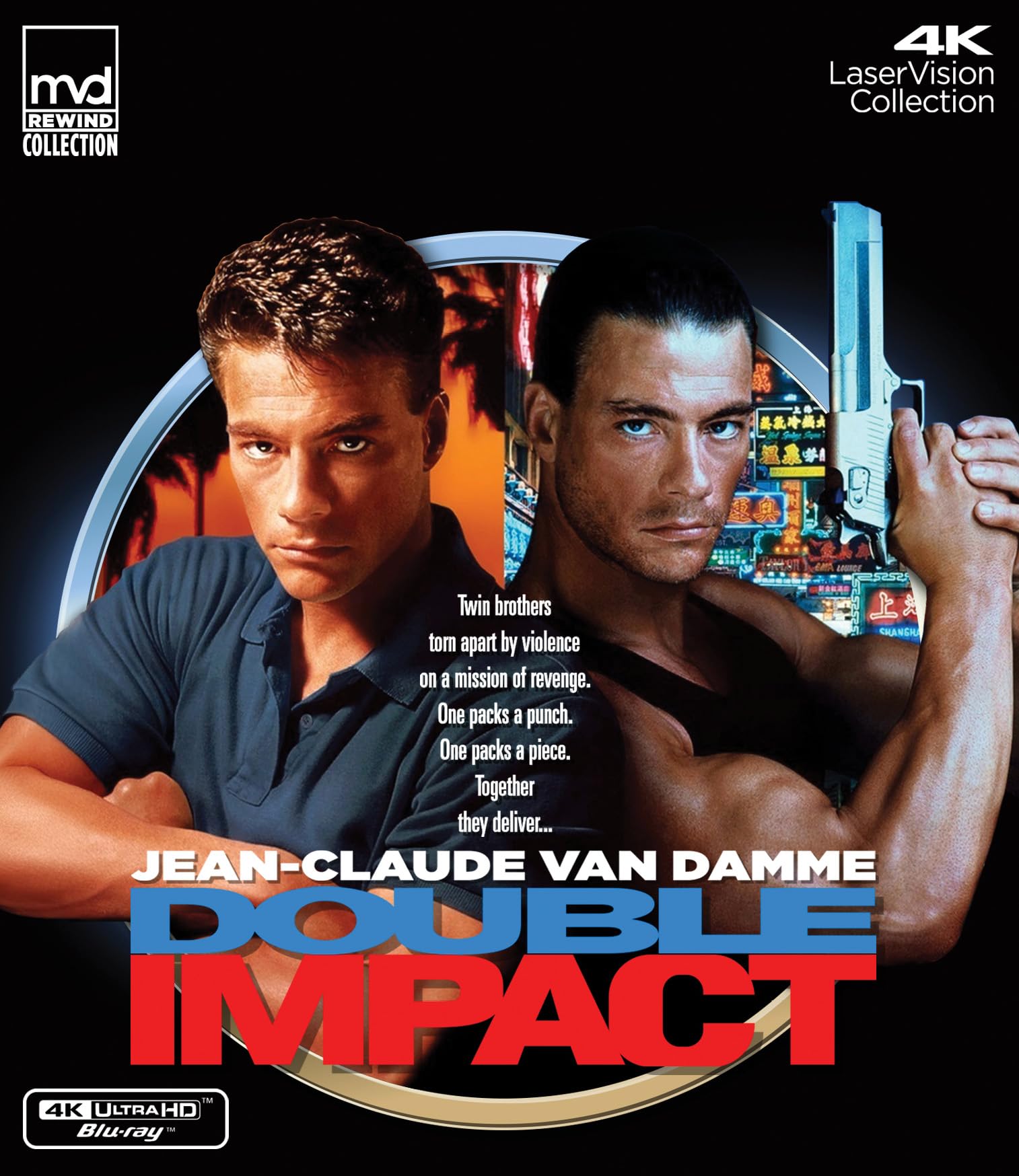
Double Impact Collectors Edition 4K Ultra HD Blu-ray

They Live - Limited Edition Steelbook 4K Ultra HD Blu-ray 4K UHD

Wizard of Oz The 4K Ultra HD Blu-ray

Hobbit Trilogy BD Blu-ray

The Complete Lady Snowblood The Criterion Collection Blu-ray

Mad Max Fury Road 4K Ultra HD
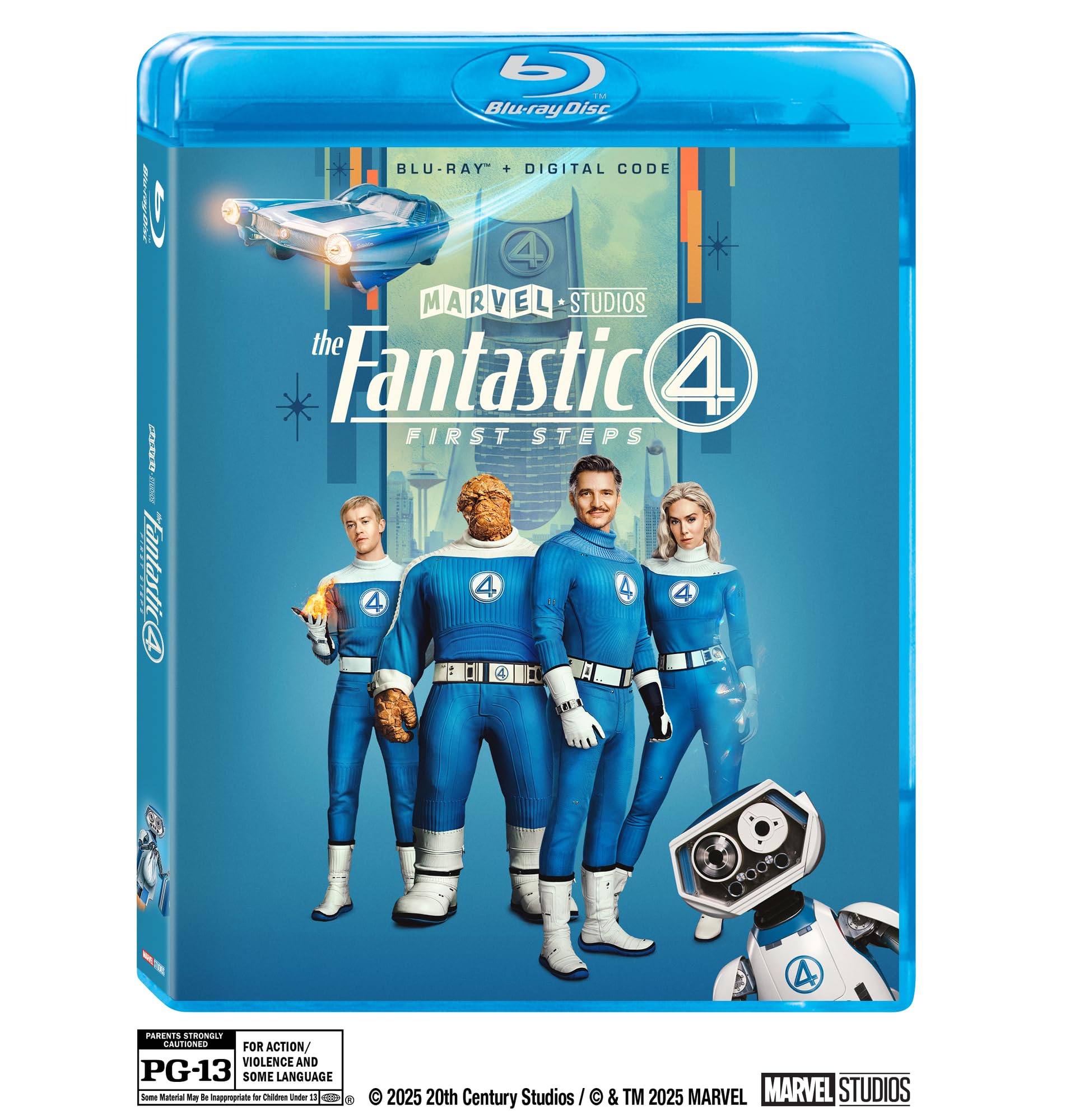
The Fantastic Four First Steps - Blu-ray Digital

The Fifth Element - 4K Blu-ray Digital

Blade Runner 2049 4K Ultra HD Blu-ray 4K Ultra

The Lord of the Rings The War of the Rohirrim 4K Ultra HD Digital
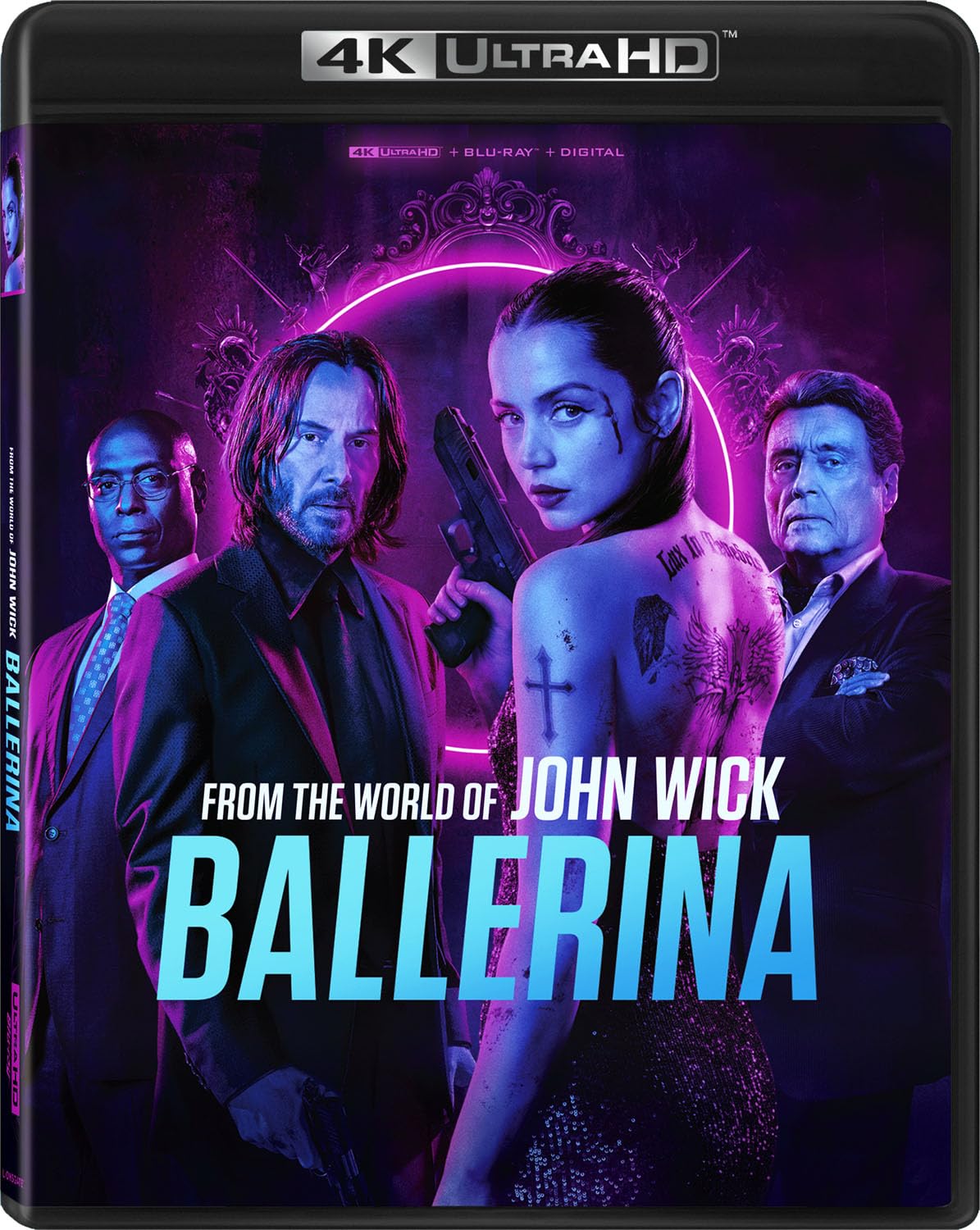
Ballerina - BLURAY Digital 4K ULTRA HD 4K UHD
Ballerina Digital 4K ULTRA HD

Man of Steel 4K Ultra HD Blu-ray
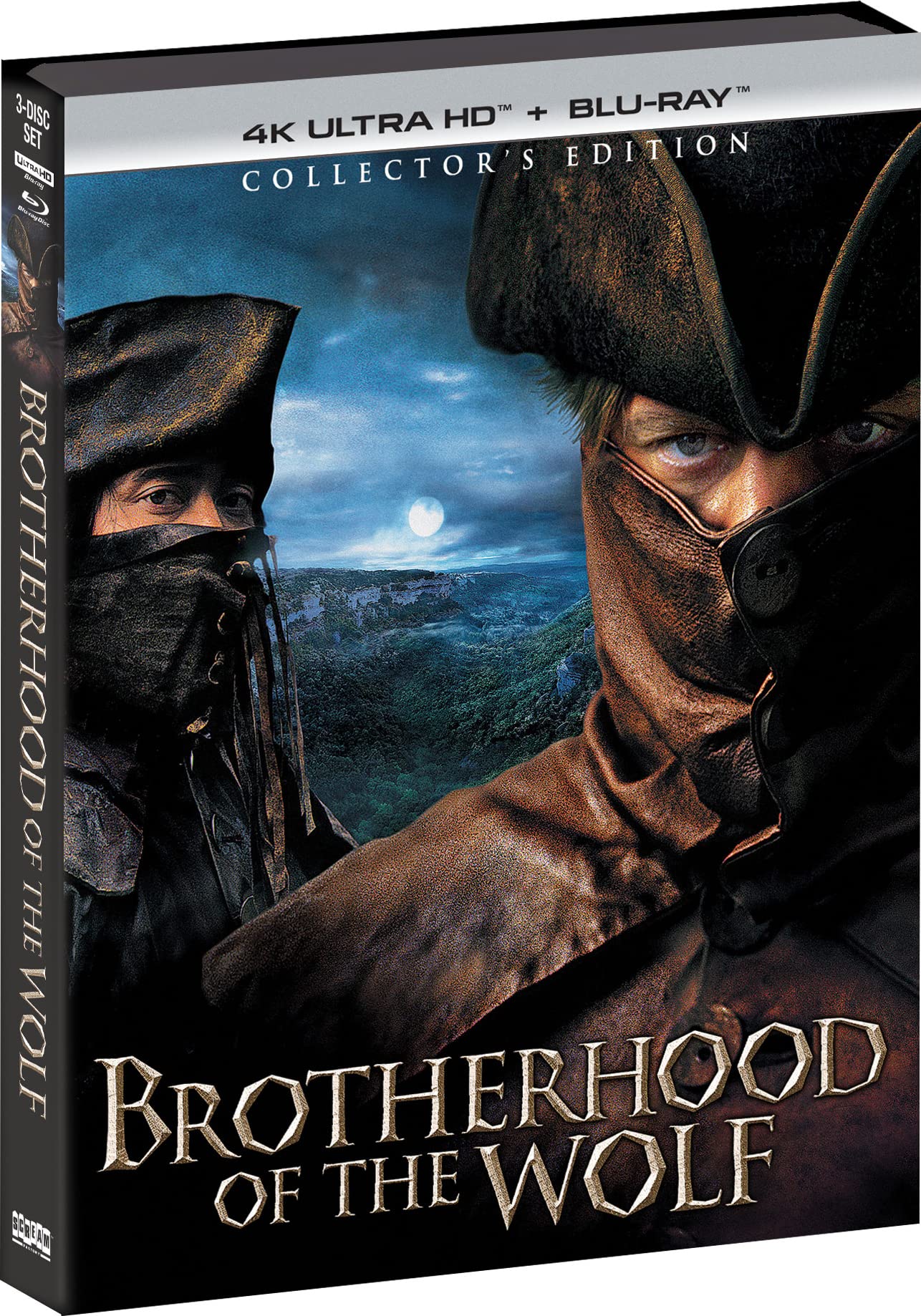
Brotherhood of the Wolf 4K Ultra HD

Princess Mononoke Blu-ray
We use optional analytics cookies to understand how visitors use Ventari and improve the experience. This banner controls analytics measurement only. See our Cookie Policy.