


a nice luxury item
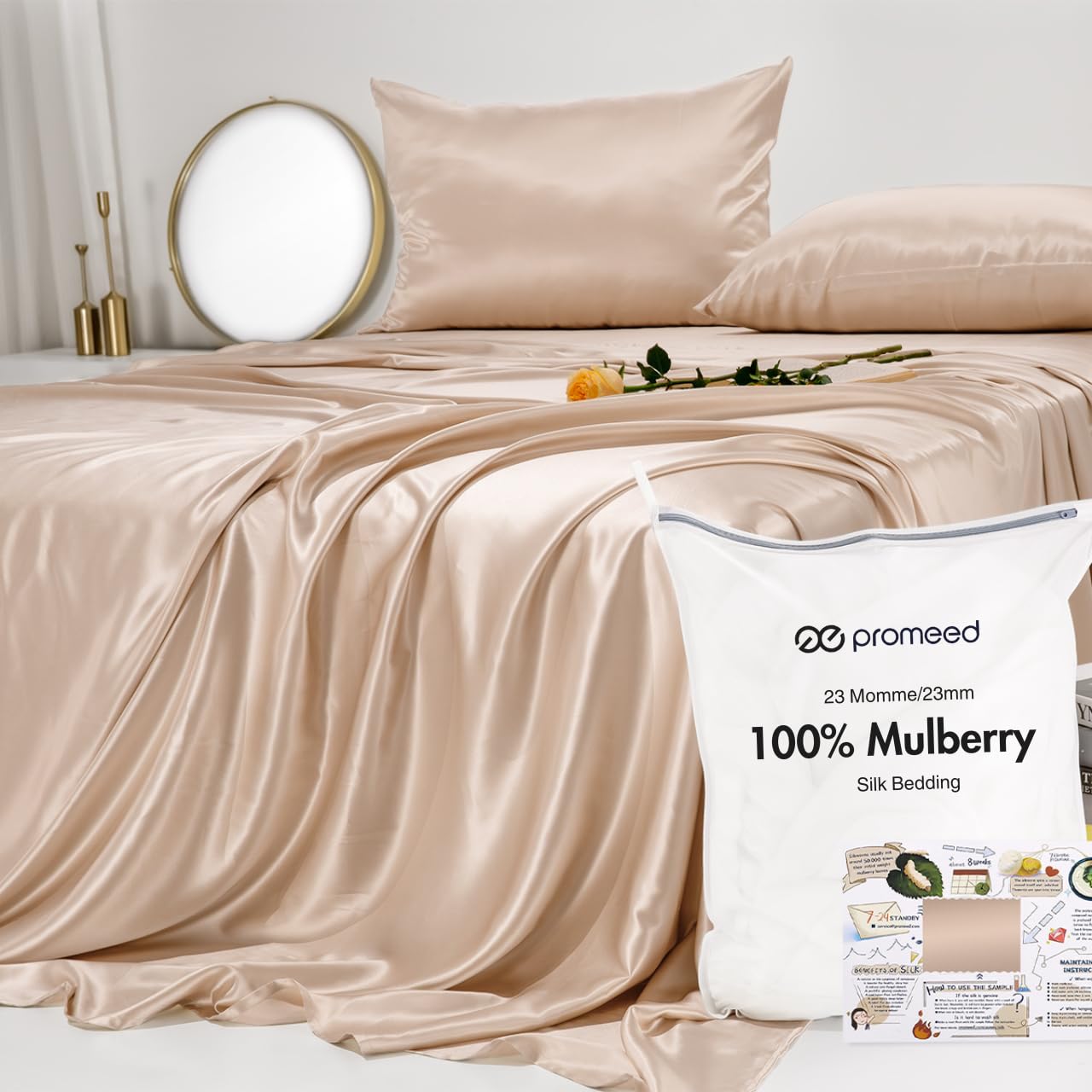
Ever hear the expression "you get what you pay for"? It isn't always true, but with this product I think it actually is. These sheets aren't cheap. That isn't to say they're unfairly priced, to the contrary from what I can tell they actually seem to be quite reasonable for what you're getting, but they sure aren't cheap. Silk is a luxury good, whether it's in clothing, curtains, or sheets. It's a natural fiber that's secreted from a worm's butt that's unusually soft and strong, but the worms need certain environments and food to do their thing and harvesting the fibers is labor intensive. So it's nice but pricey, but if you're looking to sleep on a cloud every night it's one of your best options to consider. On top of price you also need to consider the silk type, grading, and density. Silk type is fairly straight forward. A product is either silk from silk worms that feed on Mulberry leaves or it's wholly or partially a mixture of Eri, Muga, or Tussar silk. Mulberry silk is the type most often desired for textiles because of its even softness and very long fiber length. Although Mulberry silk can be produced in a number of places, 82% of the worlds production comes from China where the industry has deep, long roots. There are supposedly ways to tell the difference between 100% Mulberry and mixtures that you can find on the internet, but I have no idea if those methods are accurate so I just trust that if the product is advertised as 100% Mulberry and the company has been around for a few years without being forced to change their claims then it's probably accurate. But maybe the best way to tell is just to feel the silk. Mulberry silk has a cool, slippery feeling kind of like water flowing over your skin and is very, very smooth. Then there's grading. Like anything organic, silk comes in a variety of qualities. Silk types go all the way from A down to F, with each lower grade being shorter fiber lengths that result in clumpier, less smooth silk. Type A silk has the longest fibers, which allow for the highest quality textiles, and the quality of the fibers range from 2 to 6. 6A silk, which is about 2% of total silk output, is the highest zero-compromises quality of silk and naturally has the highest price. Finally there's the density. Most people are probably familiar with thread count, which applies to cotton textiles. A higher thread count translates into smoother, silkier fabrics, and again higher prices. Because of differences in the materials, silk can't really have a thread count. Instead it has momme, which is a measure of the weight, and hence thickness, of the silk strands. Things like silk scarves have a very light momme of something like 10, which gives it a very light airy feel but doesn't make it very durable. So generally a higher momme is better because it's a thicker, more durable fabric, but there are limits. You wouldn't want 30 momme sheets because they'd be too thick and heavy. For bedding 20-25 momme is considered preferable. Silk isn't the only option when it comes to soft, luxury bedding. There are very nice 1200 thread count cotton sheets that feel amazing, and synthetic fabrics that are just as smooth and slippery as silk. But having said that, there's a reason that even when describing high quality cotton fabric people describe it as "silky". Silk is just the standard everything gets compared to when it comes to soft, comfortable textiles. As for synthetics, although they can be as smooth as silk they don't breathe as well, aren't as nice for your skin, nor as hypoallergenic. It's a fact that as you get older your body needs some pampering to help you get a good nights sleep and as far as I'm concerned this is a very reasonable investment towards feeling rested every day. The bottom line is if you are looking to treat yourself, don't mind the increased care required to clean and maintain them, and have the room in your budget, these sheets feel incredible. Read more