


EXCELLENT QUALITY. KNOW WHAT YOU ARE DOING!!!
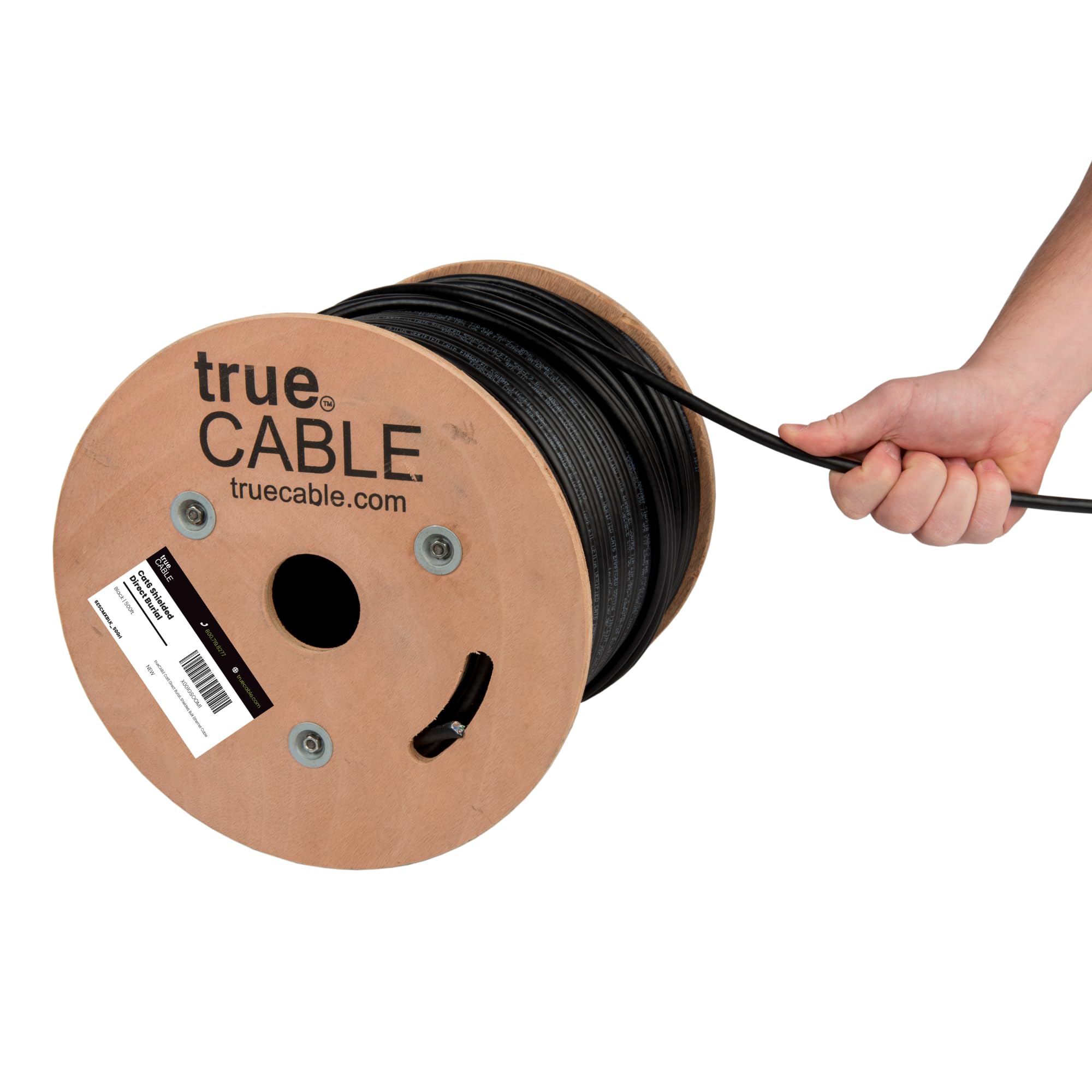
Superior cable! First, I install WiFi APs and PoE cameras where the cables often run outside. My requirements for the cabling are UV stability, thick outer jacket for weather resistance (ice, snow, wind), shielding, drain wire for grounding, and quality construction overall. This cable exceeds my requirements on all levels. Now, this is THICK stuff--far thicker than many have worked with. Once you know this going in, and what to buy and how to compensate, then you will do fine. Go in blindly and without the correct tools or research and you will be so frustrated that you won't want to try cable like this again. You might leave a bad review, and quite undeserved, just because you didn't know what you were doing. Here are the general rules: 1. Buy the PROPER shielded connectors. Now, not all RJ45 connectors are the same. Most are built to accept a different maximum conductor diameter and/or overall outside diameter (OD). For the most part, with this cable, the primary concern is the OD. The cable OD happens to be 7.8 mm. This means your connector selection is limited and you will need to know how to ovalize the end of the cable jacket prior to insertion/termination. You may need to even add a small amount of dielectric grease to the very end of the cable jacket to ease insertion. I use, and ONLY use, Platinum Tools EXO EX RJ45 connectors, model 48 with external ground. That connector is spec'd for jacket max OD of 7.75mm but it is close enough and while being a tight fit it will reward you with the fact that there are no bars or liners to deal with. The conductors will come out of the front of the connector where you can verify proper TIA 568A/B wiring sequence prior to termination. Another important point is this connector will let you tug on the wires and help to pull everything through to minimize kinks as the cable jacket seats. The EXO EX crimp tool crimps and trims the conductors in one cycle...nearly eliminating the possibility of a bad crimp as long as you do your part. 2. Buy the PROPER strip tool. You really have two options...use the string inside the cable to strip the jacket back if you don't have or don't want to buy the right tool for concentric stripping. If you use the "flay back" method you will then need to be sure the jacket is concentric as you cut the jacket off. It does not help to have a ragged jacket while you are trying to seat it inside a connector! As far as strip tools...again I use a Platinum Tools Cyclops. I use the MAX setting and it slices quite well and creates a nice concentric cut. It WILL also cut off the AL shielding in the process but not make it through the cloth water proofing tape which seems to be a cut barrier. In this case, you don't want to fold back that AL shield anyway since it would make it impossible to fight the cable into ANY connector. You will rely on the drain wire. 3. KNOW how to comb out kinks. This is CAT6E which has very tight twists and thick gauge wire. Some people use their fingers or a piece of cable jacket. Yikes. If you value you thumb and fingers...simply use a metal rounded tool like the shaft of a screw driver to remove all kinks from the end of the cable jacket all the way out. Be patient. 4. IF you are highly experienced and don't mind some bad terminations from time to time you can opt for a big CAT6A shielded connector that uses bars/liners but be prepared for an exercise in frustration because the cable spline will do all it can to keep you from perfectly lining up the conductors which will lead to conductors kinking while inserting your load bar assembly into the connector. Hence, my personal insistence on the Platinum Tools EXO EX connectors. Now, here is the construction of this cable from the outside in: PE UV Stable jacket, OD is 7.8 mm Rip cord AL foil (not metal coated mylar...actual foil) Tinned copper ground wire Cloth wrap/water proof tape Conductors arranged into 4 parts Spline I ran the entire spool of this cable and terminated either to CAT6 shielded jacks or shielded connectors and I have no issues at all. The cable does not kink up nearly as easily as standard thickness cable, but it will kink up if you are not watching. The jacket is somewhat slick like it was coated with a light wax but use cable lube inside conduit. I did make use of dielectric grease at the very lip of the cable jacket going into connectors. This will not hurt your termination or cause degradation. Read more


