Axel—December 22, 2025
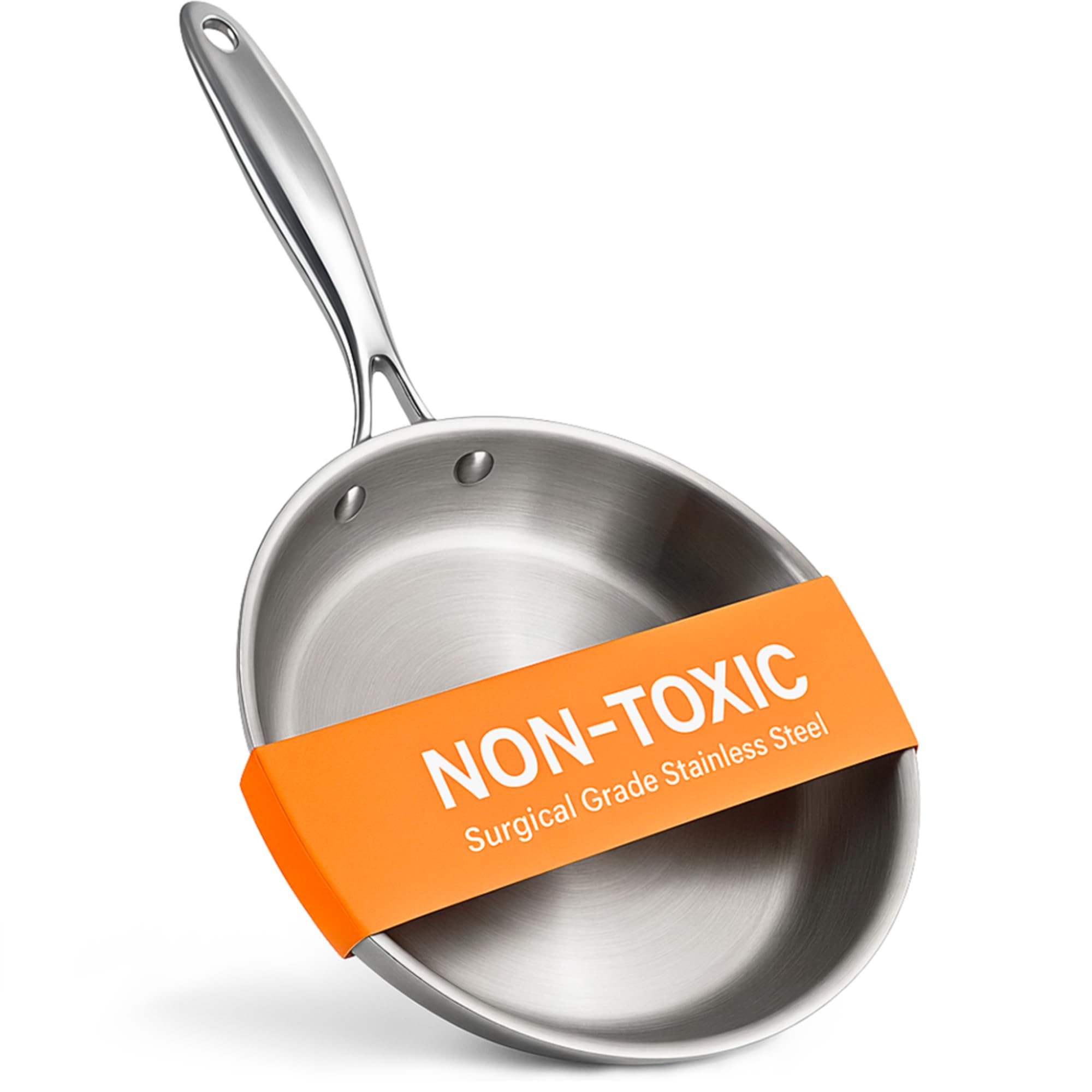
First off: THANK YOU for the "How to" card you gave me with the pan. I truly had no idea low to medium heat was all you needed. And that water test? I had heard of it. But nobody told me if it sizzled off immediately it's too hot! It makes sense now. You want it NONSTICK, not scorching hot. I also appreciate how it said to wipe it down before use (which I did, thoroughly), and how to clean it after use. This is a fully clad stainless steel pan, not a fully stainless steel pan. Meaning you get excellent heat distribution from the aluminum core. But if you try to cool it down from hot with cold water, expect warping. I like how you told me to avoid abrasives like stainless steel and instead opt for vinegar and baking soda. Vinegar has kept my stainless steel pan looking new, and a baking soda paste is just abrasive enough to scrape off any residues, and dry enough like sand to trap gunk in it like a sponge. Perfect hack! I love the DESIGN of this pan so much. Unless you flip it over, it's an unbranded premium stainless steel pan. Because why does a NAME need to be always visible!? I love that it's just a BEAUTIFUL stainless steel pan. And just because you use low - medium heat, doesn't mean it takes forever to heat up, nor does it mean it doesn't get very hot. I got mine to the point where it was nonstick within 2 and a half minutes on low medium. Other pans, like aluminum ones specifically, require constant high heat because aluminum rapidly loses heat to the air. That's why you can touch an aluminum foil pan straight out of the oven. It just does not hold heat at all. This is steel, and it does hold heat. I love the weight of this pan. It's so light but it feels hefty. The first thing I cooked in it was a Quesadilla in garlic and herb butter. 1. Heat the pan up per instructions 2. Add butter 3. Season the butter with spices and herbs 4. Fry a tortilla and set it aside (1-2 minutes) 5. Set the second tortilla on to fry, add cheese, and layer the first tortilla on. I just did this to test the nonstick properties, since I figured nothing sticks more than a tortilla. It was COMPLETELY nonstick. Indistinguishable from a Teflon pan, except in the fact that it's WAY better! I cleaned it by setting the pan off to the side, pouring baking soda on it when it was cooled thoroughly, and collecting all the gunk (butter, leftover spices, cheese bits). Don't hesitate. This pan is a winner. Read more
Joseph Lagana—December 18, 2025
Excellent SS pan, weighty and perfect size. Had to learn how to make SS pans 'nonstick' - still learning, but these are better than my previous nonstick coated pans. Read more
Dcp—December 15, 2025
Great skillet Read more
Victor Mcgee—December 24, 2025
It’s a beautiful pan feels good in the hand I gave it as a gift he loves it. Read more
Robert—December 22, 2025
This pan is lightweight and beautifully made. It heats quickly on an induction stove top. I don't quite have the patience to reliably master stick-free cooking with it, so I wipe a few drops of sunflower lecthicin into the pan before adding cooking oil and preheating. This extra step makes a big difference in non-stick performance. Read more
Norman Lew—January 2, 2026
I received the 8" skillet and it's a professional quality piece of cookware that should last a lifetime with proper care. If you are unfamiliar with what "proper care" means the included instructions explain best practices for your cookware. Overall this skillet is pretty hefty and solid feeling. The handle is nicely riveted to the skillet (see photos). The handle of this skillet is made from 304 stainless steel while the skillet itself has a magnetic aluminum core fully clad in 316 stainless steel. Typically, neither stainless steel or aluminum are magnetic but this skillet passes the magnet test and must have some iron added to the aluminum core. In other words, this skillet will work on an induction range. Stainless steel is one of the most versatile materials available today, valued for its corrosion resistance, durability, and clean appearance. Stainless steel is an alloy primarily made of nickel, iron, carbon, and at least 10.5% chromium. There are five major families of stainless steel. Both 304 and 316 belong to the austenitic family which account for over 80% of global stainless steel use, with 304 being the most common. The main difference between 304 and 316 stainless steel is the added molybdenum in 316 stainless. Adding molybdenum increases the cost and produces steel that is more corrosive resistant. 304 stainless steel is corrosive resistant but 316 is even more resistant making it the choice for marine applications and hospital use which is why you may see the terms "surgical-grade" or "marine-grade" used to describe 316 stainless steel. Since 304 steel is cheaper to produce it is more commonly used for kitchen appliances, etc. In short, 304 stainless steel is the choice for affordability and everyday durability while 316 stainless steel is the choice for maximum corrosion resistance and longevity. Read more