
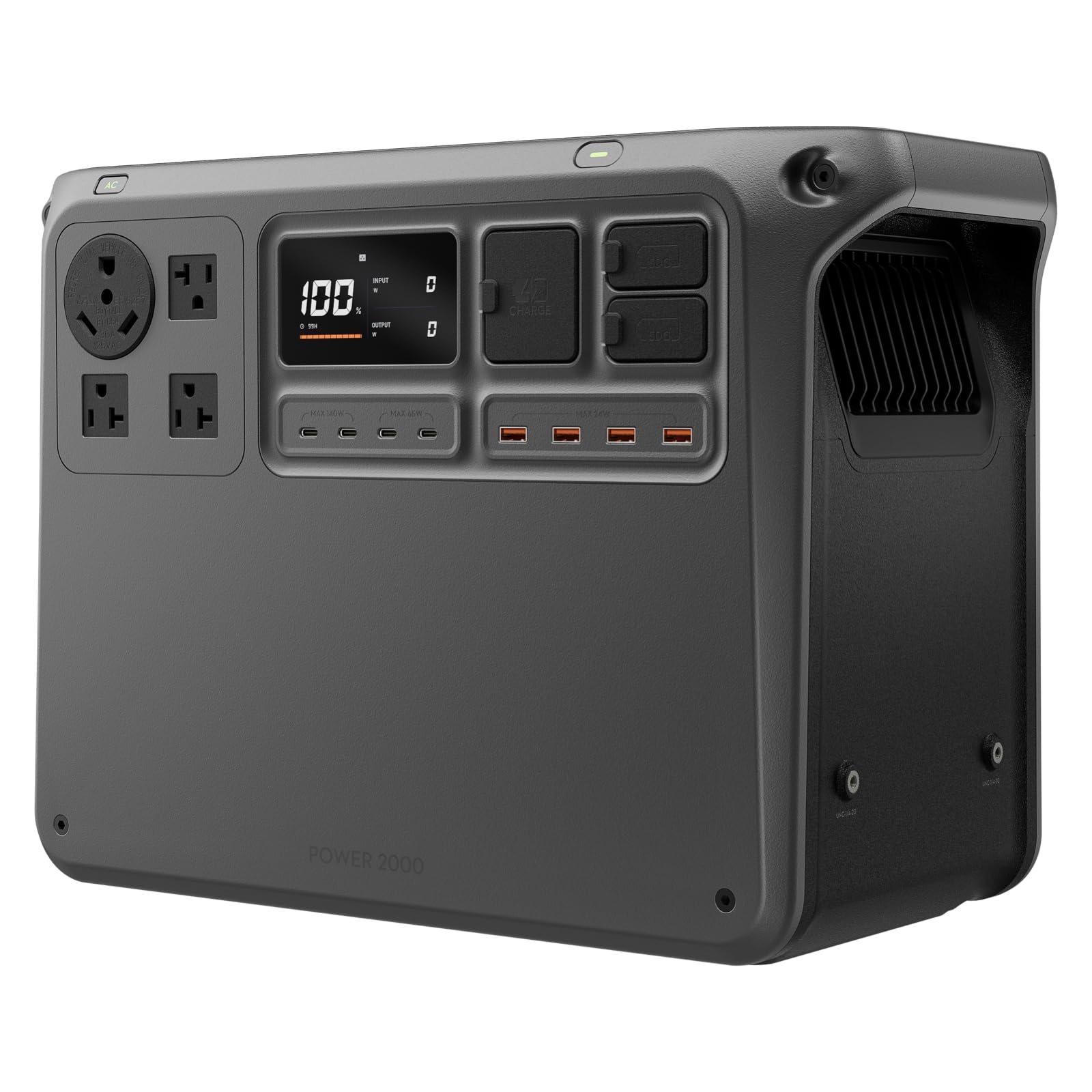


Great Dji power backup
⚙️ Specs & Performance Highlights • Capacity & Output: 2,048 Wh LiFePO₄ battery with 3,000 W continuous (4,000 W peak) output—enough to run most household or marine loads reliably  . • Recharging Speed: Charges from 0 to 80% in 55 minutes and full in ~90 minutes using AC power. It can also support up to 1,800 W solar input or up to 1,000 W via car/RV charging (with accessories) . • UPS Mode: Offers automatic switching within ~0.01 seconds to protect sensitive electronics—ideal if you’re providing backup power for radar, navigation, or communication systems . ⸻ 🛠️ Built for Durability & Quiet Operation • Operates at under 30 dB, quieter than a typical refrigerator—especially useful to avoid disturbing guests or crew aboard . • Constructed with flame‑retardant materials, sub‑nano coated electronics, 26 temperature sensors, and 21 fuses to ensure safety in harsh marine environments—including salt spray and humidity . • Physically rugged—designed to withstand up to one ton of static pressure—suitable for rough boat handling or transit . ⸻ 🔌 Port Layout & Connectivity • Offers 4 AC outlets, 4 USB‑C ports (two rated at 140 W), and 4 USB‑A ports—can simultaneously power multiple devices like charging stations, laptops, and drones . • Includes SDC ports designed for DJI drone charging or expansion batteries—though optional accessories are required. • Limited onboard wheels but offers a compatible hand trolley for easier movement on deck or dockside  . ⸻ ⚓ On the Boat: Use Cases & Benefits • Generator Depth Relief: Perfect for shifting tasks from noisy generators to quiet, clean battery power—especially useful in marina slips or when operating sensors, refrigerators, or laptops. • Short Backup Runs: With average usage of ~2 kW, it can sustain power for ~1 hour and be quickly recharged between excursions—especially beneficial during high-demand periods. • Compatibility with Solar: Mount portable solar panels on deck between trips to top up charge while at anchor (though solar input speeds depend on panel size/accessories). ⸻ ✅ What to Love & a Few Caveats Pros: • Excellent power-to-size ratio and rapid recharge time • Ultra-quiet and very rugged build • Advanced safety with long 4,000-cycle lifespan (~10 years) at 80% capacity . Cons: • Requires the DJI Home app to access some advanced charging modes, which some users find poorly optimized . • SDC accessories and proprietary connectors can feel cumbersome compared to standard XT60/MC4 systems . • Handling can be awkward aboard—no built-in wheels, though you can add the optional trolley accessory . ⸻ 💰 Pricing & Value for a Sale Deal • Launch price on DJI’s site and Amazon has been $1,299 USD, with occasional promotions under that. It represents strong value at that level considering build quality, output, and brand support  . • If you’ve spotted it on sale (especially under $1,200), you’re getting excellent hardware at a bargain compared to similarly spec’ed EcoFlow or Jackery units. Read more


